Knife Information

May 20, 2009

Knife Steel Types

Filed under: Steel Type Information — admin @ 1:43 pm

154CM Steel – The American equivalent of the ATS-34 premium grade stainless steel made exclusively in Japan, owned by Hitachi Steels.

420J2 Steel – An ideal knife blade that will be subject to high temperatures, humidity and corrosives such as salt. Does not require much care or maintenance.

440A Steel – A high-carbon stainless steel used in many American production knives.

1055 Carbon Steel – 1055 steel is right on the border between a medium and a high carbon steel, with a carbon content between 0.50%-0.60% and with manganese between 0.60%-0.90% as the only other component. The carbon content and lean alloy make this a shallow hardening steel with a quenched hardness between Rc 60-64 depending on exact carbon content. These combination of factors make this one of the toughest steels available because, when quenched, it produces a near saturated lathe martensite with no excess carbides, avoiding the brittleness of higher carbon materials. This steel is particularly suited to applications where strength and impact resistance is valued above all other considerations and will produce blades of almost legendary toughness.

1095 Steel – Plain carbon steel used in knife making. Proven to be one of the most popular steels.

4116 Krupp Stainless Steel – 4116 is a fine grained, stainless steel made by ThyssenKrupp in Germany and is used for hygienic applications (medical devices and the pharmaceutical industry) and food processing which make it a superb material for kitchen cutlery. The balance of carbon and chromium content give it a high degree of corrosion resistance and also impressive physical characteristics of strength and edge holding.

ALLOY STEEL – Steel that has been enhanced with additional elements (chromium, molybdenum, vanadium, nickel) is called alloy steel.

ATS-34 Steel – A premium grade of stainless steel made exclusively in Japan, owned by Hitachi Steels. Commonly used in high quality tactical folding knives and collectible knives. The American equivalent is 154CM steel.

AUS-8 Steel – A high carbon, low chromium stainless steel that is a very good compromise between toughness, strength, edge holding and resistance to corrosion.

CARBON – An element present in all steels. More carbon increases hardness.

CHROMIUM – A major element in martensitic stainless steel. It improves hardenability, wear and corrosion resistance.

CPM S30V – Commonly referred to as S30V was introduced by Crucible in 2002 in response to knife industry demand for a steel with more wear, corrosion resistance and toughness. It has added Vanadium for higher wear resistance and Molybdenum for better pitting resistance. It has superb edge retention because it resists edge chipping. Contents: Carbon 1.45%, Chromium 14%, Molybdenum 2%, Vanadium 4%.

D2 Steel – A high-carbon, high-chrome tool steel often used for blanking dies. This steel has excellent edge holding ability but is very difficult to process.

High-Carbon – A steel with .5 Carbon or more. The term high carbon steel is often used to mean a non stainless steel; this is incorrect, however, because all stainless steel used in knifemaking is high carbon.

High-Carbon Stainless – Any stainless steel used to make a knife blade must be high carbon to make a decent knife. Any high carbon stainless steel will stain, though less than other steels.

High-Speed Steel – Steels designed to machine other steels. These machine tools will hold an edge even when rendered red-hot by friction.

High Strength Low Alloy Steels – Known as HSLA steels are pretty new. They have been processed to have ore strength than carbon steels of the same weight.

Laminated Steel – Tool steel with a very hard core, but with outer areas made of softer material that gives great strength. Harry Morseth began the use of this material in the U.S. about 1946. It had been used for centuries in Scandinavia and Japan.

M-2 – High-Speed Steel that works well in blades requiring a hardness rating of 62-66 Rc. First used in American Cutlery kitchen knives and folders by Gerber Blades in the 1960s. Content: Carbon 85%, Tungsten 6.35%, Molybdenum 5.0%, Chromium 4.0%, Vanadium 2.0%.

M-4 – A high-speed steel that’s very hard to work, but it makes a great knife with excellent edge retention. Very much like M-2. Content: Carbon 1.3%, Vanadium 4.0%.

MARTENSITIC – Steel that is capable of being brought to a very hard condition is called martensitic steel. This steel is best suited for knife blades.

MOLYBDENUM – An element added to steel to improve hardenability, tensile strength and resistance to corrosion and pitting.

NICKEL – An alloy addition that improves steel’s toughness, hardenability and corrosion resistance. Nickel is a major element in steel used for kitchen cutlery and dive knives..

Powdered Metal – A process used to make shaped metal pieces. Fine metal particles are molded under pressure and then fused under high heat. Also known as sintered metal.

Sandvik 12C27 – Stainless steel made in Sweden. Known as a premium steel.

San Mai III – An expensive, traditional style Japanese laminate. Constructed from two different steels, this steel is 25% stronger than the incredibly tough AUS 8A steel. A hard high carbon stainless steel forms the core and edge of the blade. Two layers of tough, spring tempered stainless steel are added to support and strengthen the blade. The final blade has more elastic and better edge holding capabilities than standard stainless steels.

SK-5 High Carbon Steel – SK-5 is the Japanese equivalent of American 1080, a high carbon steel with carbon between 0.75%-0.85% and 0.60%-0.90% manganese. As quenched, it has a hardness near Rc 65 and produces a mixture of carbon rich martensite with some small un-dissolved carbides. The excess carbide increases abrasion resistance and allows the steel to achieve an ideal balance of very good blade toughness with superior edge holding ability. Due to these characteristics, this grade of steel has been used traditionally for making a variety of hand tools, including chisels and woodcutting saws, and has stood the test of time and use over many years in many countries.

Spring Steel – Any tool steel that will remain flexible when properly heat-treated.

STAINLESS STEEL – The common term “stainless” is misleading. More accurately, it should be called “stains less” because it is not “stain free.” In certain environments, any steel with carbon will rust. Stainless steel’s corrosion-resistant properties make it a good material for knife blades.

Titanium – A material that can be both hard and tough; widely used to armor jet fighters. About 1/3 lighter than steel. Very useful for knife parts, but will not hold an edge so is not useful as a blade.

Titanium Nitride – A corrosion-resistant, silvery, metallic chemical element that occurs in rutile and ilmenite. Its strength and light weight make it useful in the manufacture of alloys for the aerospace industry.

Tungsten – A hard, lustrous gray metallic chemical element with a very high melting point. It’s used in various high-temperature alloys, lamp filaments, and high-speed cutting tools.

VANADIUM – A material added to steel to improve hardenability and promote fine grain, which is an important factor in wear resistance.

Knife and Blade Terms

Filed under: Knife and Blade Information — admin @ 1:42 pm

Ballistic Cloth – A very durable, heavy nylon type material used for sheaths.

Blade Spine – The blade spine typically refers to the thickest and fullest portion of the blade. On a single-edge flat-ground knife, blade spine always refers to the outermost back of the blade. On a classic dagger, the spine refers to the fullest-thickness part of the blade running straight down the middle. On knives with false edges, the term “spine” is used inconsistently. Technically, the spine would be the fullest and thickest part of the blade where the main bevel meets the false edge bevel. However, blade spine is often used to describe the back of the blade instead, right over the false edge.

Blood Groove – A groove in the knife blade that makes the instrument lighter and stiffer, also referred to as “Fuller.” A popular misconception holds that the blood groove’s purpose is to break the vacuum when the blade is being extracted from a victim’s body. In fact, no such vacuum occurs.

Bolsters – The metal material at the blade end of knife handle. Today these are usually made of nickel silver or a mild stainless steel. In older, less expensive knives they were often made of iron or mild steel.

Bowie Knife – Any large, fixed blade knife with a blade ranging from 6 to 14 inches. The original namesake knife had a blade that was probably 9 inches long, with a sturdy guard projecting from both the top and bottom of the knife between blade and handle. Invented by Rezin Bowie and made famous by his brother, Jim, who died at the Alamo.

Butt Cap/Pommel – The pommel refers to the end of the handle of a knife. Many knives have a metal cap over the pommel, called a butt cap. Often the pommel is interesting because of a decoration; however, there are different forms of working pommels.

Caper – A knife designed to do the delicate work of skinning around the eyes and lips of trophy animals. This work is called caping because you remove the cape of the animal.

CATRA machine - a computer-controlled testing machine that gives the most accurate and repeatable data for an objective evaluation of edge sharpness and consistency.

Choil – The choil is an unsharpened section of the blade. If a guard is present, the choil will be in front of the guard on the blade itself. The choil is often used as a way to choke up on the blade for close-in work. The index finger is placed in the choil, and this close proximity to the edge allows for greater control. In addition, the choil is just in front of where the blade itself becomes part of the handle, an area often prone to breakage due to the blade-handle juncture. The choil leaves this area at full thickness and thus stronger.

Clip Point Blade – A blade on which the back line breaks and slants downward to produce a finer and more useful point. Also, a blade format where the top of the blade has a cutout (or “clip”) at the top of the blade. The cutout is either concave or straight. Clipping the blade brings the point of the knife lower, for control. It also makes the tip sharper. Since the sharp point is one of the goals of this format, the clip is often accompanied by a false edge.

CORROSION RESISTANCE – A blade’s ability to resist rust, which is the result of exposure to the environment or elements.

Cryogenic Quenching – The process of freezing blades to -120 degrees fahrenheit to improve blade performance.

Double-edged – A double-edged or spey blade has two edges. The blade cuts in either direction, with a strong sharp point. This shape is primarily used for fighting knives.

Drop Point – A blade design made popular in handmade hunting knives by Bob Loveless beginning about 1969, used earlier by Randall and others. Characterized by a slow convex-curved drop in the point. The drop-point format lowers the point for control, but leaves the point extremely strong. It’s usually coupled with plenty of belly for slicing, making it ideal for hunting knives. An extremely good all-around format that also shows up on tactical and utility knives.

DUCTILITY – The blade’s ability to flex, bend or take an impact without fracturing. If the amount of flex or bend is small before cracking or breaking, the blade is considered brittle.

EDGE RETENTION – A measure of the blade’s ability to hold an edge by resisting abrasion and wear.

Epoxy Powder Coating – A coating process that protects blades from corrosion and also makes them non-reflective.

False Edge – Many knives have beveling along the top in addition to the bottom sharpening bevel. Bevels on the top edge are referred to as a “false edge”. The false edge can be either sharpened or not.

Flat Ground – A grind that tapers from the top of the blade down to the cutting edge. Also known as a “V” grind.

Framelock – The framelock is a variant of the linerlock. Instead of using the liner, though, the frame functions as an actual spring. It is usually much more secure than a liner lock.

Full Tang – A tang that shows all around the handle of the knife between two pieces of handle material.

Guard – Also known as a hilt, is the piece of steel that separates the handle and the blade. Serves to keep the hand from slipping on the blade when cutting. Can be single or double.

Gut Hook – The unique blade shape is ideal for opening the underside flesh of game during field dressing.

HARDENABILITY – The steel’s ability to be hardened.

Hardness – The measure of hardness for tool steels is most commonly done with a Rockwell tester. (See Rockwell.) The best hardness for a given steel is not necessarily the best for another. Generally, steel blades should be hardened to the high 50s or low 60s on the Rockwell C scale.

HEAT-TREAT – An important series of steps in developing blade properties, such as toughness. Learn more about Buck’s state-of-the-art heat treating process.

Hidden tang disappears into the handle itself.

Hilt – To a sword collector, the hilt encompasses the entire handle and guard. To the modern knife world, hilt and quillion mean the same thing: The guard (single or double) between the handle and the blade.

Hollow Ground – The ground surface of the blade is concave. Used to create a fine cutting edge.

Hone – Used as a noun, it means a fine stone used to put a finished edge on a knife or razor. Used as a verb, it is the action of finishing the edge of a knife.

Honing Oil – A light oil used to keep the surface of a sharpening stone free of steel deposits and debris.

Hunter – A style of sheath knife. Used for hunting, camping and skinning.

INITIAL SHARPNESS – The sharpness of the blade right “out of the box,” and the sharpness that is the goal when re-sharpening.

Inlays – Designs of metal or other material inlaid into the handles of a knife.

Integral Hilt – The hilt and blade are machined or forged from the same piece of metal. The term “full integral” means that the blade, hilt, tang and pommel are all from the same piece of steel.

Knife – A tool with a blade and a handle. The blade will have at least one sharp edge. The first blade could have been of bone or stone, while the first handle may have been a piece of hide used to protect the hand from sharp edges of chipped or broken stone.

Knife, Boot – A knife small enough to be concealed in a boot, generally considered a defensive knife.

Knife, Combat – It opens cans of food, it digs foxholes, and it’s used in hand-to-hand combat.

Knife, Fighting – A knife intended for killing sentries, for hand-to-hand fighting and little else.

Knife, Folding – Any knife that allows the blade to be folded into the handle. Pocketknives, Folding hunters, etc.

Knife, Gentlemen’s – Any knife that is trim and elegant in form. It can be carried without embarrassment anywhere, because it conveys prestige.

Knife, Hunting – A knife used for skinning and butchering large and small game. Today it usually means a knife with a blade of 3 to 6 inches with a guard between the blade and the handle. But originally, it was a kitchen knife carried into the field. New styles appear annually.

Knife, Pocket – Any knife that can be comfortably carried in a pocket. May have several blades. Almost always a folding knife.

Kydex® – A hard plastic material used for sheaths. Chemical, corrosion and impact resistant.

Lanyard – Sometimes used to attach a knife to clothing or belt.

Lanyard Hole – A hole usually found at the butt of a knife handle to attach a thong or lanyard.

LASER CUTTING – Large blades and “hard steel” blades are cut from sheets of steel using a state-of-the-art computer-controlled laser that can cut out blades to a specified shape.

Laser Scrimshaw – Using a laser to mass-produce scrimshaw designs on knife handles.

Liner – Thin sheets of metal between the blade and the handle material of folding knives.

Liner-Lock – A liner lock has a leaf cut out of the handle’s liner. When the blade is fully open, the leaf springs open and blocks the back of the blade, preventing it from closing. Since the liner locks has no spring pushing against the blade, it has an incredibly smooth action. To unlock the knife you thumb the leaf out of the way, obviously using just one hand. The blade has a detent in it, and a small ball bearing embedded in the leaf drops into the detent when the blade is fully closed, keeping the knife from opening accidentally. This lock format is extremely strong when done correctly.

Lockback – A folding knife that has a lock release on the back of the handle and spring tension against the blade. When the knife is fully open, a tooth at the end of the spring drops into a cutout in the blade, thus locking the blade safely in place. Pressure from a spring keeps the blade from accidentally opening. Pushing the release lifts the tooth out of the cutout, allowing the knife to close.

Main Blade – The largest blade in a knife with two or more blades.

Mark Side – The side of the blade with the Nail Mark, which can be the obverse or the reverse side of the blade.

Nail Mark – A groove cut into the back of the blade for the thumbnail to easily open the knife.

Pocket Clip – A clip intended to keep a knife or other tool at the top of the pocket for easy access.

Point – The extreme end of the blade where the line of the back and the line of the edge come together.

Ricasso – The flat area above and behind the hollow or flat ground area of the blade.

Rockwell Hardness(HRC) – An industry scale used for measuring the hardness of blade steel. The higher the reading, the harder the steel. Written as HRC or RC followed by a range of numbers.

Satin Finish – A finish that is not mirror-polished; the lines from the fine abrasive gives a satin appearance.

Scale – This refers to the handle parts on each side of a full tang hunting knife, or the parts on the sides of a pocketknife or folder.

Serrated – Scallops in the edge that allow a sawing action; ideal for cutting things like seat-belts and plastic rope.

Sheath – A method for carrying a knife, tool, light, etc., on your belt, pack or anywhere a strap is. Sheaths are made of ballistic nylon, leather, kydex and various other materials. Sheaths usually come with a Velcro or snap closure.

Sheepfoot Blade – A straight edge with the back of the blade falling in a strong curve to the point of the blade.

Side-Lock – Also known as a linerlock. A locking mechanism that features a tab cut out of the liner which is used as a stop to lock the blade in an open position. To close, the liner tab is pushed back to its original position.

Spear Point Blade – The edge and the back of the blade curve to each other and meet in the middle.

Spey Blade – Blade intended for the castration of livestock. The cutting edge curves up strongly to meet a very minor clip. Most often found in stock knives or cattlemen’s knives.

Stick tang – Thins out considerably once it goes into the handle.

STRENGTH – Steel’s ability to resist applied forces.

Swedge – A bevel grind on the edge of the back of a blade. If it were sharp it would not be a swedge, but would be a False Edge.

Tang – The tang is the part of the knife where the blade stops and the handle starts. There are many different terms used to describe what kind of tang a knife has, because the strength and other characteristics of the knife depend on the tang format.

Tanto – The classic Japanese tanto shape has the point exactly inline with the spine of the blade, and has a graceful belly curve. Most tantos seen on the American cutlery market are the Americanized tanto format. Like the Japanese tanto, the Americanized tanto has a high-point in-line with the spine. A flat grind is applied to the point, leaving it very thick and massively strong. The front edge meets the bottom edge at an obtuse angle, rather than curving to meet it as in the Japanese tanto. There is a separate grind applied to the bottom edge, often a hollow grind to leave this edge extremely sharp. Other tanto formats have become popular also, and modifications such as clipping the point or applying a chisel-grind are often seen.

Tapered tang – To save weight, the maker can taper the tang so it gets thinner as it goes back into the handle.

TEMPERING – The final step in the heat-treat process to improve toughness.

TENSILE STRENGTH – Ability to resist breaking. Ultimate Tensile Strength is the maximum load per square inch a blade can sustain before breaking.

Thong Hole – A hole at the butt of a knife handle intended for a wrist thong or lanyard.

Knife Manufacturer’s

Filed under: Knife Manufacturer Information — admin @ 12:52 pm

Al Mar KnivesSince 1979, Al Mar Knives™ has been committed to making unique designs at quality levels that rival custom, hand-made knives. Today, each knife crafted by Al Mar is hand-finished and hand-sharpened by craftsmen dedicated to creating the very best possible. Each Al Mar knife features flat-ground blades for strength and superior performance – and that’s just one reason to trust the Al Mar name. At Al Mar Knives, A Warrior’s Edge ™ means Factory Perfection ™.  Where to buy Al Mar Knives

Bear & Son Cutlery, IncWe have a skilled and experienced work force capable of performing many of the extra hand operations that go into the making of our products.  The Bear & Son Cutlery factory is unique.  It is full self-contained.  While some companies only assemble parts brought from various suppliers and put their names on the product, we do everything in-house from building our own blanking dies to heat treating, grinding and assembly, and hand finishing our products.  These steps insure that Bear & Son cutlery is of excellent quality and a real value for both the dealer and consumer.  Purchase Bear and Son Cutlery

Beretta, USA - Founded in 1977, Beretta U.S.A. currently employs about 300 employees in its production facility in Accokeek, Maryland and in its warehouse in Fredericksburg, Virginia. Beretta U.S.A. also operates two Beretta retail stores in the United States, one located at 718 Madison Avenue in New York City and the other found in the Highland Park Shopping Center in Dallas, Texas. Where to buy Beretta Knives

Blackie Collins Design   Purchase Blackie Collins Knives
PO Box 100
North, SC 29112
Phone 803-568-2444
fax: 803-568-2481

Boker USA, Inc. – A giant chestnut tree, shading the small Boeker tool factory in Remscheid in the 17th century, is the oldest traceable symbol connected with the Boeker name. Apparently, Boeker tools were very successful, since they were among the leading products in Germany and neighboring countries 100 years later. Purchase Boker Knives

Bradley Cutlery Company
128 Rush Court
Elkhart, IN 46516
Phone 877-765-0600  Purchase Bradley Cultery

Browning – Since the introduction of John M. Browning’s famed Superposed, the name Browning has been synonymous with innovative and reliable over and under shotguns. The best-selling Citori followed, successfully bearing the flag of Browning shotgun superiority and further solidifying Browning’s place as the pre-eminent over and under shotgun company. Purchase Browning Knives

Buck Knives, Inc. – A young Kansas blacksmith apprentice named Hoyt Buck was looking for a better way to temper steel so it would hold an edge longer. His unique approach produced the first Buck Knife in 1902. Hoyt made each knife by hand, using worn-out file blades as raw material. His handy work was greatly appreciated during World War II. After the war, Hoyt and his son Al moved to San Diego and set up shop as H.H. Buck & Son in 1947. Al Buck revolutionized the knife industry in 1964 with the Model 110 Folding Hunter. The folding “lockblade” knife made Buck a leader. A position we proudly hold today. Hoyt and Al Buck’s ingenuity may have put the company on the map. But it is our ongoing commitment to developing innovative new products and improving what we have by third and fourth generation Buck family members that have made Buck the successful knife maker it is today. Purchase Buck Knives

C.A.S. Iberia Inc. – Today, the names Hanwei and its founder, Paul Chen, engender an image of fine functional swords and historical weaponry. Based in Dalian, China, Hanwei manages to combine traditional craftsmanship with modern tooling and metallurgy, in a way that enables it to supply a world-wide market while meeting or exceeding the quality of custom-made products. Purchase Cas Hanwei products

Chicago Cutlery – Chicago Cutlery began in 1930 as a knife conditioning service that catered to professional butchers and packing plants. When the demand for sharp knives increased, Chicago Cutlery evolved into a knife manufacturing business for the meat and poultry industry. In 1969, Chicago Cutlery entered the retail market with professional cutlery. Knives designed to meet the tough demands of professional knife users became available for home use. Today, the Chicago Cutlery brand is owned by World Kitchen, LLC which continues to market the same type of innovative products that made Chicago Cutlery one of the most trusted and well known names in knives. Where to buy

Cold Steel, Inc - Cold Steel’s rigorous standards for quality and performance. These designs are tried and true, the result of painstaking research and development. This is a Cold Steel hallmark. We do not exaggerate. Our descriptions are accurate. Cold Steel knives represent real, solid value for the money backed by our unconditional 30-day guarantee of complete satisfaction. Where to buy Cold Steel Knives

Columbia River Knife and Tool - We’re dedicated to making practical, purpose-driven knives that are high in quality, innovative in design, and tops in value. Where to buy CRKT knives

Combat Elite  Purchase Combat Elite Items
3989B Hwy 62 West
Berryville, AR 72616
(740) 965-9970
(870) 423-3413 Fax
info@combatelite.com

Diamond Machining TechnologyThe entire line of DMT products is manufactured in the company’s facility in Marlborough, Massachusetts. Home to the firm since 1983, the facility accommodated sales, marketing and production departments. The expanded production area houses first-of-its-kind injection molding systems complete with robotics to produce its patented DuoSharp® lines as well as the internationally recognized polka-dot patterned Diamond Whetstone™ line. DMT products have always been made in Massachusetts. The company’s story began in Hudson, Massachusetts on the third floor of an old mill where DMT first developed and produced diamond saw blades for use in cutting blocks of granite. With a 1978 change in U.S. foreign policy, America released a significant part of the stockpile of industrial diamonds to Israel, causing world prices to plummet and DMT sales to plunge to near zero. Faced with the need to diversify, the company made a rather unlikely discovery. Purchase DMT Sharpeners

Edgecraft Corporation – The formation of the EdgeCraft Corporation in 1984 was followed shortly by the launch of the original knife sharpener, the Chef’sChoice® Model 100. Incorporating 100% diamond abrasives and precision guides to produce a unique and razor sharp edge, this revolutionary sharpener won immediate worldwide acclaim. Purchase Chef’sChoice® Products

Emerson Knives - Respected, admired, and sought after by the world’s most sophisticated and discerning knife users, Emerson remains the single standard by which all other Hard Use Knives are judged. This peerless reputation has been built by the hands of a master craftsman Ernest Emerson with unceasing effort since its’ beginning in 1979. Purchase Emerson Knives

EZE Lap Diamond Products -  EZE-LAP has been the pioneer and originator of diamond sharpeners since the early 1970’s. Or patented diamond process and modern technology allows EZE-LAP to produce the finest quality diamond products for the lowest possible price. Purchase EZE-Lap Sharpeners

Forschner (Swiss Army Brands) – It has been 125 years since the first Swiss Army Knife was introduced. Since that time many things have changed, but the ingenuity, precision and unwavering devotion to quality that drive our various product lines has remained consistent. Purchase Victorinox Swiss Army Brands

Frost Cutlery – Jim Frost began collecting pocket knives in 1969. This small hobby, started by an everyday shift worker at a chemical plant, has grown over the past 35 years into a multi-million dollar business which employs over 125 employees at its sole plant in Chattanooga, Tennessee. The business began in Jim’s lunch bucket and quickly grew out of his car trunk, garage, and four increasingly larger warehouses before finding its home in a 100,000 square foot plant completed in 2002.  In 2004, he added another 50,000 square feet for a total of 150,000 square feet. Buy Frost Cutlery Knives

Gerber Legendary Blades – Joseph Gerber started Portland, Oregon’s Gerber Advertising back in 1910. One Christmas, he hired a local knifemaker to craft 25 sets of kitchen cutlery as client gifts. The knives were so popular, Mr. Gerber ultimately left his agency to launch Gerber Legendary Blades in 1939. Purchase Gerber Knives

Henckels (Zwillings J.A. Henckels, Inc) – ZWILLING J.A. HENCKELS brand begins on June 13, 1731 (under the Gemini star sign). It was on that day that knife-maker Peter Henckels from Solingen registered the “TWIN” symbol as his trademark with the Cutlers´ Guild of Solingen. This symbol, which is now well-known all over the world, is thus one of the oldest trademarks in the world. Today´s name – ZWILLING J.A. HENCKELS – was given to the Company by a descendant of Peter Henckels, Johann Abraham Henckels. Buy JA henckels Kitchen Knives

Ka-Bar Knives – Soon after its introduction in the mid-1920’s, the KA-BAR trademark became widely known and respected. There have been many versions of how the KA-BAR name came to be, but all evidence points to a letter received from a fur trapper. This particular fur trapper’s testimonial turned out to be the most significant ever received by the company. He wrote, in very rough English, that his gun had jammed and that he had therefore relied on his knife to kill a wounded bear that was attacking him. In thanking the company for their quality product the trapper described using his knife to kill the bear. All that was legible of his scrawled writing was “k a bar”. The company was so honored by this testimonial that they adopted this phrase and used it as their trademark, KA-BAR.  Purchase Ka-Bar Knives

Kershaw (Kai Cutlery) – SpeedSafe® is a patented system that assists the user to smoothly open any SpeedSafe® knife with a manual push on the blade’s thumb stud or pull back on the blade protrusion. SpeedSafe® is built into many of Kershaw’s best-selling knives. Purchase Kershaw Knives

Lansky Sharpeners – Since 1979, Lansky Sharpeners has been recognized as the world leader in Sharpening Technology. Each LANSKY SHARPENERS product is carefully designed to meet unparalleled performance, reliability, and safety standards. All LANSKY SHARPENERS products are engineered to be completely ambidextrous, and manufactured with superior quality materials by craftsmen who are committed to providing you with a product that is second to none. Shop for Lansky Sharpeners

Leatherman Tool Group, Inc – Since 1983, we’ve been making tools that can endure just about anything and come back to work tomorrow. Where to buy Leatherman tools

Mag Instrument – Armed with only his talent, his determination and his reverence for hard work, Tony Maglica set out in pursuit of the American Dream when he founded Mag Instrument in 1955. When he went on to design and manufacture a product that revolutionized an industry, he realized that Dream in full. In his ongoing pursuit of innovative technology, quality products, design and the customer service to back them up, Mr. Maglica has found a strategy that not only creates worldwide demand for his own company’s products, but can also, he believes, help other American companies to build worldwide demand for their products while preserving American manufacturing jobs. Where to buy Maglites

Marble’s Outdoors – Webster L. Marble came to Michigan’s Upper Peninsula in the early 1890’s and quickly gained the reputation of being one of the regions finest “timber cruisers”. His uncanny ability to look at a specific forested acreage and predict the board foot yield made him very popular with the many logging companies in the area. Marble loved the outdoors and the vast Upper Peninsula offered innumerable opportunities to hunt, fish, camp and explore the environment. An inventor by nature he was continually seeking to create useful tools and equipment that would be both practical and durable in the outdoors. By 1898 Mr. Marble had designed and patented his now famous “Safety Axe”. A modest one room manufacturing facility located behind his home became the “Marble Safety Axe Company” and the dedicated entrepreneur was on his way. Over the next quarter century Marble designed and patented axes, sporting knives, guns and numerous other hunting and outdoor related products. In 1911 the company was renamed “Marble Arms and Manufacturing Company”, the first of several name changes over the years. The Marble’s legacy lives on today. Within the pages of this website you will find abundant examples of our commitment to “Blend Time Tested Tradition with Modern Technology”. Still based in Michigan’s Upper Peninsula, the owners and employees of Marble’s are now, more than ever, committed to Webster Marble’s vision of making quality, durable, and practical outdoor equipment for serious sportsmen the world over. Purchase Marbles Knives

Meyerco - the original assisted opening mechanism knife company. Thanks to the creative mind of Blackie Collins and the legendary vision of Bill Meyer, we were able to produce and patent the first assisted opening knife. Where to buy Meyerco products

Mission Knives & Tools, Inc. – The knives that Mission designs are not only new and unique in there physical appearance, but also in their material composition for the production of indestructible and long lived cutting equipment. Purchase Mission knives

Mundial Inc. - North American marketing, sales and distribution arm for the world’s highest quality
scissors, knives and related kitchen accessories and personal care implements produced by
Mundial S.A. in Porto Alegre, Brazil. The group and the Mundial trademark were established in Germany in 1931. Where to buy Mundial kitchen knives

McCoy Purchase McCoy knives
P.O. Box 20378
Hot Springs, AR 71903
1-501-525-3914
Fax 1-501-525-0816

Rapala – Normark Corp – It all began with a hungry Finnish guy and a carving knife. It was the 1930s when a simple fisherman made an observation of simple genius: Big fish eat little fish, especially little fish that are wounded. So begins the greatest fishing story ever told. As Lauri Rapala fished the waters of Finland’s Lake Paijanne, he quietly rowed and watched. And what he saw was how hungry predator fish would dart into a school of minnows and attack the one that swam with a slightly off-center wobble. Over and over again. Lauri realized that if he could craft a lure that mimicked the movements of a wounded minnow, he could catch more fish, earn more money, and not spend time constantly baiting lines. So Lauri set to work. He whittled. Carved. And shaved. Eventually a lure began to take shape. Using a shoemaker’s knife and some sandpaper, he created his first successful lure from cork in 1936. Tinfoil from chocolate bars formed the lure’s outer surface. Melted photographic negatives the protective coating. But most importantly, it perfectly imitated the action of a wounded minnow. Legend has it that Lauri sometimes caught 600 pounds of fish a day with that new lure. And as word of his abundant catches spread, the lure’s reputation grew. The rest, as they say, is history. That first lure was the forefather to the lure that has helped more fishermen experience the thrill of more big fish than any other: the legendary Original Floating™ Rapala. Purchase Rapala knives

Norton Company - For over 110 years, Norton Abrasives has provided the innovative products and solutions that our customers require. Whether you’re sanding a piece of furniture, finishing a turbine blade or slicing a semiconductor component, if you are using abrasives, we have the product and the know-how. Today, Norton manufactures and distributes the widest range of abrasives and related products for the industrial marketplace. Where to buy Norton knife sharpeners

Ontario Knife Co. – The Ontario Knife Company was founded in Naples, New York in 1889. Naples is located in upstate New York, in Ontario County, southeast of Rochester. Ontario Knife is named after Ontario County. Ontario Knife is located in Franklinville, New York, about one hour south of Buffalo. All products are made at, and shipped from, the Franklinville factory. In addition to sporting/outdoor knives, Ontario makes a number of other product lines including Old Hickory® Kitchen Cutlery, Industrial and Agricultural Products, and Sci-Med Scientific Tools and Instruments. Ontario’s sister company, Queen Cutlery, is a well known maker of finely crafted pocketknives. Also, Ontario Knife is a major supplier of private label blades and knives. Purchase Ontario knives

Opinel – Start of the 19th century the Opinel family first began to forge metal at the start of the 19th century. In 1817, Victor-Amédée was working as a peddler and learned his trade as a blacksmith during his rounds. He set up a forge in Albiez le Vieux, a small village near St Jean de Maurienne in the Savoie region, where he made nails, billhooks, knives, etc. His son Daniel (front row, right) took over the workshop and followed in his father’s footsteps. Shop for Opinel knives

Outdoor Edge – Our goal at Outdoor Edge is to combine functional design with the sharpest, best edge holding steels, state of the art production processes and hand craftsmanship to create the finest quality knives and hand tools for the big game hunter. I personally develop and field test each product on a variety of game to ensure the highest performance and stand behind everything we make with a Lifetime Warranty. Where to buy Outdoor Edge products

Puma c/o Coast Cutlery – Henry W. Brands—the first of three generations of the Brands family who would operate this Portland manufacturer and distributor—founded Coast Cutlery Company in 1919. Puma Since it was formed on the Wupper River in 1769, PUMA has set the standard that established Solingen, Germany as the premier knife manufacturing center in the world. PUMA is in fact the 8th oldest trademark in Germany. PUMA has been distributed in the United States for over 50 years and has established a strong reputation for sharp, high-quality hunting knives that hold their edge. You will be delighted with our knives. Shop for Puma Knives

Queen Cutlery Company – Queen Cutlery is a well-known maker of finely crafted pocketknives. Queen Cutlery’s factory is located in Titusville, PA, about two hours northeast of Pittsburgh. While all manufacturing is done in the Titusville factory, most other functions, including sales, accounting and customer service, are handled in Franklinville, NY at the site of Queen’s sister company, Ontario Knife Company. Queen Cutlery’s roots go back to the Schatt and Morgan Cutlery Company, which was founded in Gowanda, NY in 1890 and moved to Titusville in 1895. Queen Cutlery is still housed in the original Schatt and Morgan factory and many of the delicate hand processes and operations employed by Schatt and Morgan are still being used by Queen. Skilled craftsmen are essential to build a “factory knife” by hand and, while it doesn’t lead to mass production or extremely low prices, the results are beautiful, functional knives. Our many awards are a testament to the skill of the Queen craftsmen. Purchase Queen Cutlery

Randall King Knives, Inc. – Purchase Randall King Knives
2 Countryside Drive
Asheville, NC 28804 
Main office 828-253-0161

Remington Arms Company, Inc. - Headquartered in Madison, N.C., designs, produces and sells sporting goods products for the hunting and shooting sports markets, as well as military, government and law enforcement markets. Founded in 1816 in upstate New York, the Company is one of the nation’s oldest continuously operating manufacturers. Remington is the only U.S. manufacturer of both firearms and ammunition products and one of the largest domestic producers of shotguns and rifles. Shop for Remington products

Sentry Solutions Ltd. - Founded over 40 years ago, with the mission of applying 21st Century dry film technology to combat corrosion, friction and wear. We applied our expertise to revolutionize the care and maintenance of the firearms and gear carried by military and law enforcement personnel. Purchase Sentry Solutions products

Slip-N-Snip – We are the original inventor and manufacturer of folding scissors. All components are manufactured here in the United States. No part of our scissors are imported or fabricated outside the United States of America. Where to buy Slip-N-Snip scissors

Smith Abrasives, Inc. – Smith’s, the Edge Experts since 1886 from our humble beginnings as a small Arkansas stone company to our current position as the market leader in the knife and scissor sharpening category, Smith’s has become the fastest growing, full line supplier of great sharpening products.  Our simple goal is to provide consumers with the best edge for whatever task they are performing, while also providing outrageously good customer service. Purchase Smith’s Knife Sharpeners

SOG Specialty Knives – SOG originally stood for Studies and Observation Group, an elite joint services military group designed for covert operations in the Vietnam War. Sanctioned to develop and purchase their own equipment, SOG created a knife for use in one of the harshest environments in the world. It is in the spirit of this elite group that SOG Specialty Knives was founded. Totally committed to creating the world’s finest specialized knives and tools, SOG became the first knife manufacturer to expand its line to include a broad scope of fixed blades, folding knives and multipurpose tools. Each product is created by Founder and Chief Engineer, Spencer Frazer. His patented inventions and unique, futuristic style have earned SOG many awards and Frazer the recognition as an industry innovator and premier designer. Today, SOG products are distributed around the world and renowned for their uncompromising style and performance. Purchase SOG Knives

Spyderco, Inc. – Since starting Spyderco we’ve been told our knives are different, peculiar, even out there. All true. Thinking beyond established knife industry barriers allowed us to introduce new and radical innovations to the knife culture including: One-hand opening, serrations on a folder and a clip to attach a knife to a pocket. We didn’t go into business to rake in a mountain of dough we’re here for more selfish reasons- indulging our passion for creating knives. Where to buy Spyderco Knives

Taylor Brands, LLC  – is the official manufacturer and wholesale distributor of Smith & Wesson and Schrade Knives. Founded by Stewart Taylor in 1975, Taylor Brands has been manufacturing, designing and distributing high-quality stainless steel knives and accessories since its inception. Our new 163,000 square foot Distribution Center is located directly off Interstate 26 in Kingsport, TN, in the heart of the Appalachian Mountains – just 20 miles southwest of the TN / VA border. Purchase Smith & Wesson and Schrade knives

Tru Hone – Commercial Knife Sharpeners Since 1973. Tru Hone Corporation has continually strived to improve the process of knife sharpening. With the development of the HG3 Hollow Grinder and HR8 Honer, Tru Hone Corporation has a sharpening system for any size operation. Tru Hone knife sharpening machines are made in Ocala, Florida, USA using stainless steel construction and only the finest components. Our sharpeners are built for years of service. Still owned and operated by the Gangelhoff family, we at Tru Hone Corporation are committed to excellence in our knife sharpening products and in service to our customers. Purchase Tru Hone sharpeners

United Cutlery – For over twenty years United Cutlery® has been distinguished by our unique and innovative product designs that cover a wide range of knives and swords, from functional to fantasy. Purchase United Cutlery products

Utica Cutlery Co.
820 Noyes St.
Utica, NY 13503
800-888-4223
Purchase Utica Cutlery

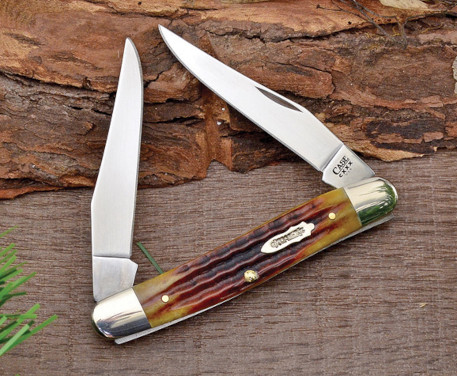
W.R. Case & Sons Cutlery Company – American manufacturer of premium, hand-crafted knives that are passed down for generations.  Based in Bradford, PA, Case’s offerings include a wide variety of knives that fit virtually any need, from convenient folding pocketknives and fixed blade sporting knives to limited edition commemoratives and collectibles. The company’s rich history began in 1889 when William Russell (“W.R.”), Jean, John, and Andrew Case began fashioning their knives and selling them along a wagon trail in upstate New York. A unique tang stamp dating system used since the very early days of its history has cemented the Case brand as one of the most recognized and valuable collectibles in the industry.  Today the Case Company is owned by Zippo Manufacturing, another family-owned business based in Bradford. Purchase Case knives

Wyoming Knife Co. – Unmatched quality, perfomance and value since 1971.
Purchase Wyoming Knife Co products

History of Knife Makers

Filed under: Knife Company History — admin @ 12:22 pm

A tradition that just won’t quit!

       As soon as man discovered stone, a new tradition was born. The art of knife and spear making dates back perhaps as much as 5 million years. It is likely to be one of the oldest hobbies or occupations known to humans. A sharp piece of stone is believed to be the first and most widely used tools on earth. At first these sharp stones were only used for eating, cutting, poking, and prying. The stones were also used to sharpen sticks or attached directly to the end of a wooden shaft. This widely used tool could be used for hunting, fishing, attacking, and defending.

This opened the door for more handy materials for the custom knife makers. Hunters and fisherman began to harvest teeth, claws, bone, horn, and shells, for custom knife makers. I believe that these exotic blade and handle materials that inspired the desire to collect. This was a tradition among all cultures of the world. Even today, (millions of years later) countless collectors continue to appreciate this fine art of craftsmanship. Artist took pride in these spiritual and valuable tools.

The discovery of soft metals, approximately 12,000 years ago, rapidly advanced the design and durability of these edged tools and weapons. Using fire to liquefy the metals, blacksmith’s would poor liquid bronze and copper into molds made out of stone. This process enabled them to produce larger, more useful tools and weapons such as axes, swords, and armor. The blades were heated, hammered into shape, and soon they were even sharpened. This replaced countless hours of chipping, filing, and sanding required by making blades from stone or bone.

These soft metal blades were shortly replaced by the discovery of forged iron. This material produced a stronger, more durable blade that could be used for thrusting or chopping. Techniques such as spring tempering improved the tapering abilities for blades of all types. Guttering or grooving of the blades was incorporated to lighten the tools or weapons without sacrificing strength. The earliest known folding knives also date back to the early Iron Age. A folding pocket knife with a bone handle was found at Hallstatt, Austria. The estimated age of the folder was nearly 2600 years.

The tradition of knife and edged weapon making has held a certain spiritual value across the Middle America, Europe, Asia, and Africa. These fine tools have been a symbol of power, bravery, and courage for an unknown number of years.


BUCK. INGENUITY RUNS IN THE FAMILY.
A young Kansas blacksmith apprentice named Hoyt Buck was looking for a better way to temper steel so it would hold an edge longer. His unique approach produced the first Buck Knife in 1902. Hoyt made each knife by hand, using worn-out file blades as raw material. His handy work was greatly appreciated during World War II. After the war, Hoyt and his son Al moved to San Diego and set up shop as H.H. Buck & Son in 1947. Al Buck revolutionized the knife industry in 1964 with the Model 110 Folding Hunter. The folding “lockblade” knife made Buck a leader. A position we proudly hold today. Hoyt and Al Buck’s ingenuity may have put the company on the map. But it is our ongoing commitment to developing innovative new products and improving what we have by third and fourth generation Buck family members that have made Buck the successful knife maker it is today. Frankly, it’s what our customers expect from a Buck.

Gerber Legendary Blades
Savvy. Ingenuity. Craftsmanship. Attention to detail. These are just a few of the company traits that contributed to our emergence as a world leader in outdoor gear. But then there’s the issue of toughness. And frankly, nothing could be tougher than living down the first career of founder Joseph Gerber as…that’s right…an advertising man. You could call it the “Boy Named Sue” syndrome. And live it down we have.

Joseph Gerber started Portland, Oregon’s Gerber Advertising back in 1910. One Christmas, he hired a local knifemaker to craft 25 sets of kitchen cutlery as client gifts. The knives were so popular, Mr. Gerber ultimately left his agency to launch Gerber Legendary Blades in 1939.

How KA-BAR Got Its Name
Soon after its introduction in the mid-1920’s, the KA-BAR trademark became widely known and respected. There have been many versions of how the KA-BAR name came to be, but all evidence points to a letter received from a fur trapper. This particular fur trapper’s testimonial turned out to be the most significant ever received by the company.

He wrote, in very rough English, that his gun had jammed and that he had therefore relied on his knife to kill a wounded bear that was attacking him. In thanking the company for their quality product the trapper described using his knife to kill the bear. All that was legible of his scrawled writing was “k a bar”. The company was so honored by this testimonial that they adopted this phrase and used it as their trademark, KA-BAR.

Marbles Outdoors
Webster L. Marble came to Michigan’s Upper Peninsula in the early 1890’s and quickly gained the reputation of being one of the regions finest “timber cruisers”. His uncanny ability to look at a specific forested acreage and predict the board foot yield made him very popular with the many logging companies in the area. Marble loved the outdoors and the vast Upper Peninsula offered innumerable opportunities to hunt, fish, camp and explore the environment. An inventor by nature he was continually seeking to create useful tools and equipment that would be both practical and durable in the outdoors.

By 1898 Mr. Marble had designed and patented his now famous “Safety Axe”. A modest one room manufacturing facility located behind his home became the “Marble Safety Axe Company” and the dedicated entrepreneur was on his way. Over the next quarter century Marble designed and patented axes, sporting knives, guns and numerous other hunting and outdoor related products. In 1911 the company was renamed “Marble Arms and Manufacturing Company”, the first of several name changes over the years.

The Marble’s legacy lives on today. Within the pages of this website you will find abundant examples of our commitment to “Blend Time Tested Tradition with Modern Technology”. Still based in Michigan’s Upper Peninsula, the owners and employees of Marble’s are now, more than ever, committed to Webster Marble’s vision of making quality, durable, and practical outdoor equipment for serious sportsmen the world over.

Ontario Knife Company
The Ontario Knife Company was founded in Naples, New York in 1889. Naples is located in upstate New York, in Ontario County, southeast of Rochester. Ontario Knife is named after Ontario County.

Ontario Knife is located in Franklinville, New York, about one hour south of Buffalo. All products are made at, and shipped from, the Franklinville factory.

In addition to sporting/outdoor knives, Ontario makes a number of other product lines including Old Hickory® Kitchen Cutlery, Industrial and Agricultural Products, and Sci-Med Scientific Tools and Instruments.

Ontario’s sister company, Queen Cutlery, is a well known maker of finely crafted pocketknives. Also, Ontario Knife is a major supplier of private label blades and knives.

PUMA® Knife Company USA
Since it was formed on the Wupper River in 1769, PUMA has set the standard that established Solingen, Germany as the premier knife manufacturing center in the world. PUMA is in fact the 8th oldest trademark in Germany. PUMA has been distributed in the United States for over 50 years and has established a strong reputation for sharp, high-quality hunting knives that hold their edge. You will be delighted with our knives.

Queen Cutlery
Queen Cutlery is a well-known maker of finely crafted pocketknives. Queen Cutlery’s factory is located in Titusville, PA, about two hours northeast of Pittsburgh. While all manufacturing is done in the Titusville factory, most other functions, including sales, accounting and customer service, are handled in Franklinville, NY at the site of Queen’s sister company, Ontario Knife Company.

Queen Cutlery’s roots go back to the Schatt and Morgan Cutlery Company, which was founded in Gowanda, NY in 1890 and moved to Titusville in 1895. Queen Cutlery is still housed in the original Schatt and Morgan factory and many of the delicate hand processes and operations employed by Schatt and Morgan are still being used by Queen. Skilled craftsmen are essential to build a “factory knife” by hand and, while it doesn’t lead to mass production or extremely low prices, the results are beautiful, functional knives. Our many awards are a testament to the skill of the Queen craftsmen.

Taylor Brands, LLC
Taylor Brands, LLC is the official manufacturer and wholesale distributor of Smith & Wesson and Schrade Knives. Founded by Stewart Taylor in 1975, Taylor Brands has been manufacturing, designing and distributing high-quality stainless steel knives and accessories since its inception. Our new 163,000 square foot Distribution Center is located directly off Interstate 26 in Kingsport, TN, in the heart of the Appalachian Mountains – just 20 miles southwest of the TN / VA border.

The history of Heinr. Böker Baumwerk GmbH
A giant chestnut tree, shading the small Boeker tool factory in Remscheid in the 17th century, is the oldest traceable symbol connected with the Boeker name. Apparently, Boeker tools were very successful, since they were among the leading products in Germany and neighboring countries 100 years later.

Due to the increasing demand in a restless political era, Hermann and Robert Boeker decided in 1829 to begin with the production of sabers. As early as September 1830, the accounting records indicate a weekly production of 2,000 items, made by 64 smiths, 47 grinders and a large number of unskilled laborers. In view of the constantly increasing variety of tools and cutting instruments and the good opportunities for worldwide sales, the family realized that the individual steps in the manufacturing process had to be spread out for optimal realization of its interests. As a result, Hermann Boeker emigrated and founded H. Boeker & Co. in New York. Young Robert developed his enterprise in Canada, founding a branch in Mexico later in 1865. This branch is still a market leader in its country under the name of Casa Boeker.

Heinrich crossed the nearby Wupper river and went to Solingen, where the German industry of cutting tools was growing by leaps and bounds at that time. In 1869, he founded Heinr. Boeker & Co. with Hermann Heuser, a well-known specialist in the field of cutting tools. The Boeker family in Remscheid and their overseas cousins had a lot of interest in and a great demand for shaving blades, scissors and pocket knives from Heinrich’s new enterprise. They had to identify their products for the overseas markets in a simple way, since many customers and consumers had problems with the German name Boeker – not considering the fact that illiteracy was widely spread. In Heinrich’s opinion, the chestnut tree near the Remscheid facility represented an ideal, easy-to-remember symbol. This brand symbol was owned by the Remscheid company, together with a second logo, the arrow. One of the few valuable documents that survived the total destruction of WWII is an ad by Boeker, Remscheid, from the year 1874, showing both logos.

The relationship between the two Boeker companies had always been extremely friendly. Therefore, Heinrich was allowed to take the tree symbol across the river with him – without any big fight or cost. Since then, not a single Boeker article has left the Solingen factory without being identified by the tree symbol. After more than 100 years of existence the old chestnut tree was the victim of lightening. In 1925 a talented artist carved a copy of the majestic tree on a piece of the trunk. This original piece of art decorates the boss’ office in the Boeker plant.

As early as 1900, the majority of articles produced by Boeker were distributed in the US market. H. Boker & Co. in New York concentrated primarily on cutting tools from Solingen. Soon pocket knives became more important than scissors, shaving blades and eating utensils. The demand increased even more rapidly than Solingen was able to supply, so that the Americans in New York began their own production of pocket knives. A little later, pliers were included as well. Since the tree symbol had become well known by then and the various branches of the international Boeker family enjoyed an excellent relationship among each other, it was not difficult to receive permission from the Solingen relatives to use the tree symbol also for the American products. Since that time, two different lines of Boeker knives have been on the American market with the same brand symbol, sometimes even with the same article numbers, but one line was made in the USA and the other in Solingen. Only the declaration of marketability clarified that one line was from Boker USA and the other from H. Boker Improved Cutlery Solingen.

The relationship was interrupted during WWII. The Solingen factory burned down completely. None of the equipment, tools, catalog materials or samples was spared. Those few originals from the past we have today survived the war in private homes and were made available to the company. The firm lost one of its most valuable assets: the registration of the tree symbol for the American market was confiscated pursuant to American law. John Boker Jr. acquired it in New York, in order to secure it for the distribution of the American and German products. Soon after the war, the destroyed factory was rebuilt. Those loyal skilled workers who had survived the war, returned and helped with the reconstruction of the building as well as the production, gradually regaining the previous high standard of quality.

The American cousins renewed their business contact with Solingen and started to place orders. Within a few years Boker, New York, had again become the principal customer. Models like the 7588 and 7474 and the most expensive item, the sports knife Flagship Model 182 could not cross the ocean fast enough to reach Boker friends all over the country.

In the early 60s, Boker USA was sold and eventually acquired by the well-known scissors manufacturer Wiss & Sons. Wiss retained the manufacture of Boeker knives and sold them together with Solingen products. Of course, this meant that the Boeker scissors ceased to be competitors of the Wiss line in the American market. In the early 70s, Wiss sold to Cooper Industries, a multinational company. This new change in America proved to be advantageous for Boker.

A very close business, as well as personal relationship developed with this industrial giant. Due to its strength on the market, Cooper was able to restore the original magnitude of the Boeker name. Thanks to the very lively business activities with Cooper for eight years, the Solingen facility could streamline its production and develop new, modern products. Without exaggeration, Boker manufactures the largest assortment of high-quality knives for sportsmen and collectors with an unsurpassed variety of materials for blades and handles. Today, Boeker knives range from 320-layer Damascus steel to very modern ceramics, with handles ranging from high-quality mother-of-pearl to Thuya root wood and state-of-the-art synthetics…

In 1983 Cooper discontinued its own knife production. Models still in demand are being manufactured in Solingen today. As a result of friendly negotiations, Cooper restored the American trademark rights three years later, providing Solingen with the opportunity to become self-reliant in the huge American market. Thus, in 1986, Boker USA, Inc. was created in Denver, Colorado. Dan Weidner, who has been part of Boker USA almost since its inception, is now the president of the company, working with a young, energetic team. The great importance of Boeker in the South American markets (Argentina and Chile) and in Mexico is due to the efficient men of the Boeker family, who were active for us in these countries in the 19th and 20th centuries. Today’s trademark includes the terms TREEBRAND and ARBOLITO. Since the Argentinian market in particular is subject to extreme economic and political fluctuations, the good name ARBOLITO was in danger of being forgotten. In 1983, Boeker Arbolito S. A. was founded jointly with the Salzmann family primarily to manufacture household and work knives in Argentina. Thanks to the constant modernization and expansion of product lines the company in Buenos Aires is able to compete worldwide with selected products today.

The History of the ZWILLING J.A. HENCKELS Brand
What exists today as the most exclusive, best performing brand in the kitchen, the company’s roots are steeped in 275 years of tradition.
The history of the ZWILLING J.A. HENCKELS brand begins on June 13, 1731 (under the Gemini star sign). It was on that day that knife-maker Peter Henckels from Solingen registered the “TWIN” symbol as his trademark with the Cutlers´ Guild of Solingen. This symbol, which is now well-known all over the world, is thus one of the oldest trademarks in the world. Today´s name – ZWILLING J.A. HENCKELS – was given to the Company by a descendant of Peter Henckels, Johann Abraham Henckels.

Today, products by ZWILLING J.A. HENCKELS are recognized globally as the symbol for the highest possible quality and function. If you are considering a J.A. Henckels Purchase or Registry Request, we urge you to view the brand’s history presentation.

The SOG Story
SOG originally stood for Studies and Observation Group, an elite joint services military group designed for covert operations in the Vietnam War. Sanctioned to develop and purchase their own equipment, SOG created a knife for use in one of the harshest environments in the world. It is in the spirit of this elite group that SOG Specialty Knives was founded.

Totally committed to creating the world’s finest specialized knives and tools, SOG became the first knife manufacturer to expand its line to include a broad scope of fixed blades, folding knives and multipurpose tools. Each product is created by Founder and Chief Engineer, Spencer Frazer. His patented inventions and unique, futuristic style have earned SOG many awards and Frazer the recognition as an industry innovator and premier designer. Today, SOG products are distributed around the world and renowned for their uncompromising style and performance.

Knife Handle Information

Filed under: Handle Material Information — admin @ 12:20 pm

Abalone/ Paua – Gathered in Mexico, Abalone shells are cut into thin “feathers”, edges are glued in thin sheets with each sheet color matches and then laminated with a high pressure laminate into sheets for handle material. Paua is a similar shell found in New Zealand.

Alumite – A hard coating used to protect aluminum handles from corrosion and scratches.

Amboyna – Comes from SE Asia, only the burls from the Narra tree are used to give the numerous, beautiful swirls that comes out in the Amboyna handles.

Anodized – A treatment that colors titanium using electric current.

Black Mother-of-Pearl – Rare shell harvested by deep sea divers in various parts of the Pacific Ocean; no artifical color or enhancements added.

Boi D’arc Wood – Comes from the Osage tree of Texas, this dense yellowish, orange wood is used frequently by Native Americans.

Bone – Procured from Brazil, the shin bone of the Zebu cattle are the main source of bone suitable for Case bone handle materials.

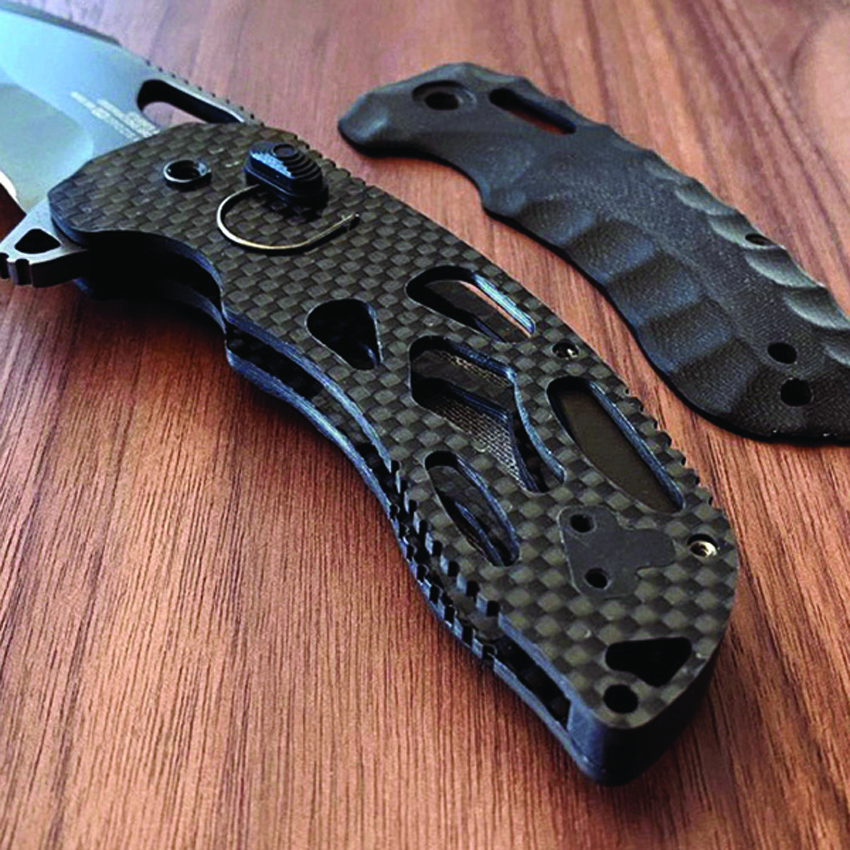
Carbon Fiber – Graphite fibers (the size of a human hair) are woven together and fused in epoxy resin. It’s lightweight, three-dimensional in appearance and is a superior (and expensive) handle material.

Corelon – A synthetic resin handle material developed in a wide variety of colors and patterns.

Curly Maple – A knurly section of wood from a maple tree is used for handle material. The wood has a curled design, giving it a very distinct look.

Curly Oak – A knurly section of wood from an oak tree is used for handle material. The wood has a curled design, giving it a very distinct look.

Desert Iron Wood – Comes from the deserts of SW America or Mexico, a heavy wood which is regarded as some of the most beautiful wood anywhere.

Ebony – Comes from Africa. This black wood is also used in woodwind instruments.

Exotic – EX indicates that the handle material used is from a variety of the most unique and desirable materials available; such as, precious gemstones, giraffe and ostrich bones, etc.

Glass-Filled Nylon – Material used to make sheaths. Nylon is reinforced with glass particles and other materials to provide strength and durability while still allowing some flexibility.

G-10 – Using the same process as the Micarta, G-10, however, has a glass cloth reinforcement substrate for exceptional strength characteristics with a very high impact and tensile strength. The lines and swirls that show in the finished knives are these layers of glass cloth.

Hardwood – This number is usually used for a hardwood, such as walnut. Walnut is a very durable and rugged hardwood used for working knives.

Imitation Mother of Pearl – Imitation Pearl is a composite material that looks like mother of Pearl.

Imitation Ivory – Imitation Ivory is a composite material that looks like natural ivory.

Ivory – Since the last ice age, the Mammoth Ivory tusks have been locked in ice some 12,000 years. This is perhaps the most beautiful and exotic of all handle materials.

Jigged Bone – Derived from deceased animals, generally the chin bone of a cow. The bone is generally dyed and surface texture is obtained by cutting grooves into the bone.

Jigged Laminate – Laminated wood with a jigged pattern; such as used on the Folding Hunter.

Jigged Synthetic – Plastic molded covers with a jigged pattern.

Kraton® – Man made material resembling rubber that can be molded into knife handles. Provides a non-slip grip.

Lace Wood – Comes from Burma Rain Forest and is a hardwood.

Micarta – High pressure plastic laminate with either a paper or cotton cloth reinforcement substrate. Micarta is a very durable handle material which is waterproof, impact resistant and polishes well. The lines and swirls that show in the finished knives are these layers of paper or cotton cloth.

Midnight Stag – Genuine Stag except it is treated with a black dye and the covers do not get burned during completion.

Mother-of-Pearl – Natural shells harvested by deep sea divers in various parts of the Pacific Ocean.

Pakkawood – A laminated wood typically birch or maple, impregnated with clear resin and bonded together. Pakkawood has the natural beauty of finished wood and a high resistance to heat and moisture.

Pink Mother-of-Pearl – Only pearl shells which are found in fresh water; no artifical color or enhancements added.

Polypropylene – A thermoplastic substance that is a synthetic polymer of propylene. It’s used in making pipes, industrial fibers, and molded objects.

Polycarbonate – A strong synthetic resin used in molded products, such as knife handles, unbreakable windows and optical lenses.

Prime Stag – Genuine India Stag with an extra rough texture – the best of the best.

Red Stag – Genuine stag except ithe stag is treated with a red dye and the covers do not get burned during completion.

Rosewood – A handle material that comes from a number of hardwood trees from rain forests. It has a rose colored effect and is becoming more rare.

Sermollan – A rubberized plastic used on kitchen knife handles that offers a secure grip and resistance to bacteria.

Smooth Black Synthetic – Black poured plastic molded handles usually made from Delrin® or Thermoplastic Rubber.

Smooth Synthetic – Poured plastic or Delrin® molded handles made in most any color except black and yellow.

Snake Wood – Comes from South America and is considered the heaviest wood on earth.

Stag – Naturally shed or dropped deer antlers. The most desirable Stag comes from the Sambar or Chital deer in India. Stag covers are burned lightly during the completion process.

Stainless Steel – Steel that contains a minimum of 12-1/2-13% chromium, making it resistant (not stain-proof) to corrosion. The chromium oxide “CrO” creates a barrier to oxygen and moisture, preventing rust formation.

Thermoplastic – A substance that becomes soft and pliable when heated, without a change in its intrinsic properties. Polystyrene and polyethylene are thermoplastics.

Titanium – A material that can be both hard and tough; widely used to armor jet fighters. About 1/3 lighter than steel. Very useful for knife parts, but will not hold an edge so is not useful as a blade.

Tulip Wood – Comes from the Tulip trees, found in jungles and North America.

Vintage Bone – Natural Bone with a special jigging pattern which has similar characteristic to stag.

Vintage Stag – Genuine Stag that is not dyed or burned during the manufacturing process, but is given extra buffing and hand finishing.

Wood Epoxy Laminate – This is an impregnated wood laminate, which is extremely hard and machines similar to Corian, aluminum and Micarta.

Yellow Synthetic – Smooth yellow poured plastic molded handles, called Delrin®.

Zebra Wood – Comes from Africa, a hard, dense, beautiful wood, naturally striped like a Zebra.

Zytel – A glass-filled nylon material used in making handles for knives. DuPont trademark.

6.5 BoneStag® – Case registered trademark, is bone handle which is jigged and treated with flame to achieve the look of stag antler material.

Powered by WordPress